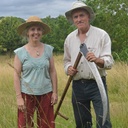
The second weekend of August, we attended the 2025 European Scything Championship in Thundorf, Upper Bavaria, Germany. We decided to travel by train as observers, so we didn't take any equipment to participate.
Since 1969, the European Championship has been held every two years in a different location and brings together competitors from different countries. It has previously been held in Germany, Austria, Switzerland, South Tyrol, Slovenia, and the Basque Country. This year, the following countries or regions were represented: Bavaria, Austria, Switzerland, the Basque Country, South Tyrol, Slovenia, Slovakia, and the Czech Republic. As in any competition, the Scything Championship is also an opportunity to surpass and measure oneself against others, but also to cultivate humility, team spirit, and respect.
Although the scythe has lost its economic importance throughout Europe, it is still used in many mountainous regions where steep slopes make working with machinery difficult, if not impossible. It is therefore not surprising that large delegations of competitors and champions typically come from these regions.
In addition to the festivities of the previous days, the day before the championship, there was an opening ceremony with the Parade of Nations. As each group marched from the back of the marquee to the front of the stage, waving their flags, the band played their national or regional anthem. The competitors then drew their plot numbers.
A little glimpse of the opening ceremonies the evening before
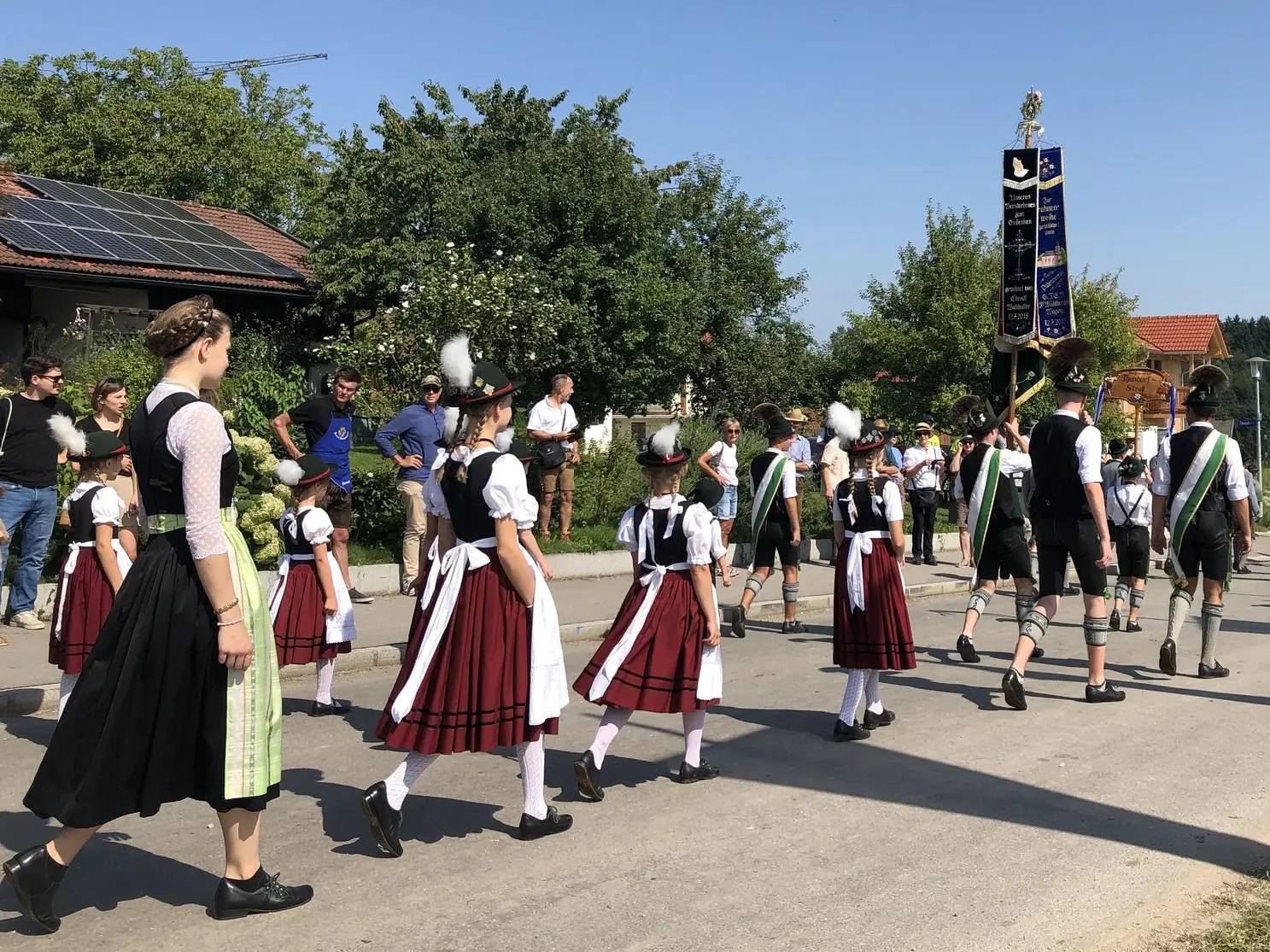
Many people, from the very young to the elderly, wore traditional clothing. It was beautiful to see! The local orchestra played traditional music all evening, and the Basques performed some folk dances. The atmosphere was very festive!
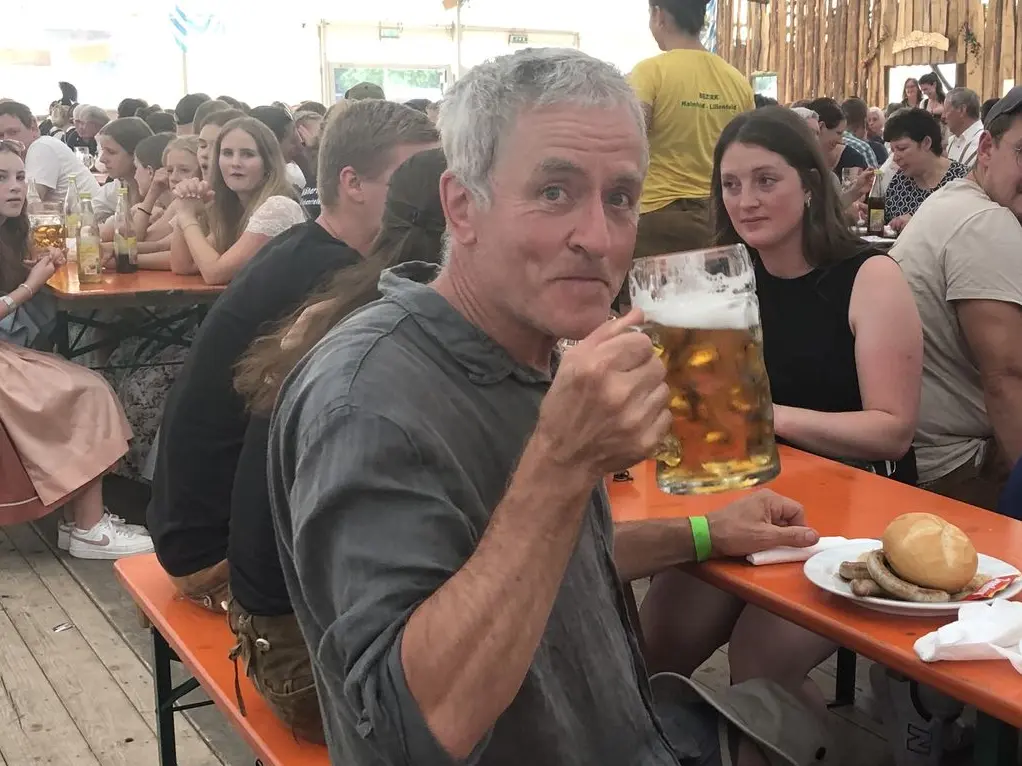
When in Bavaria, do as the Bavarians do!
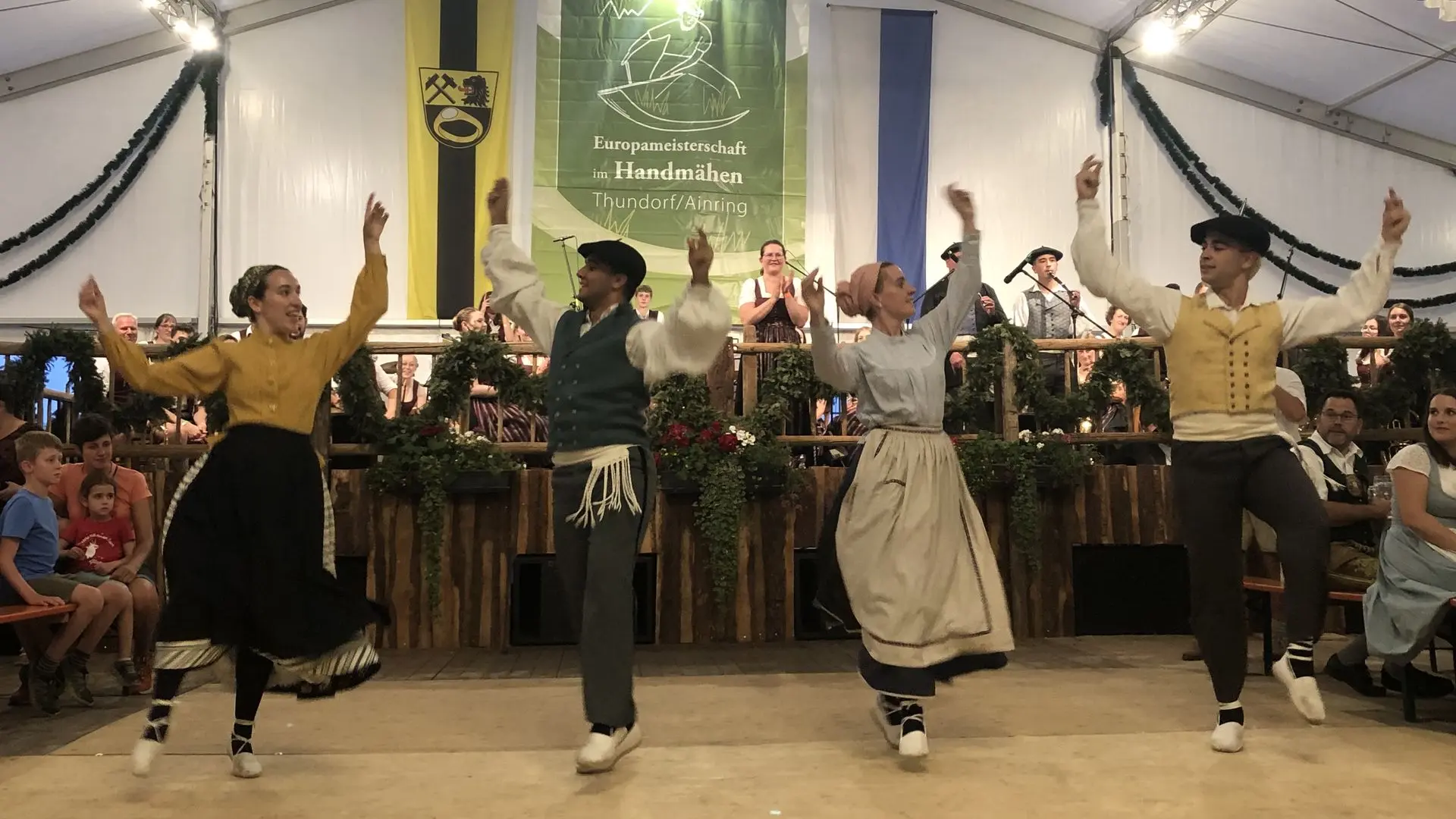
Basque dancers
The morning of the championship, many people were gathered in the big tent for coffee and pastries (but also beer and sausages for those who wanted it!), music by the same local orchestra as the day before, and many of the same volunteers. When did they all sleep?!
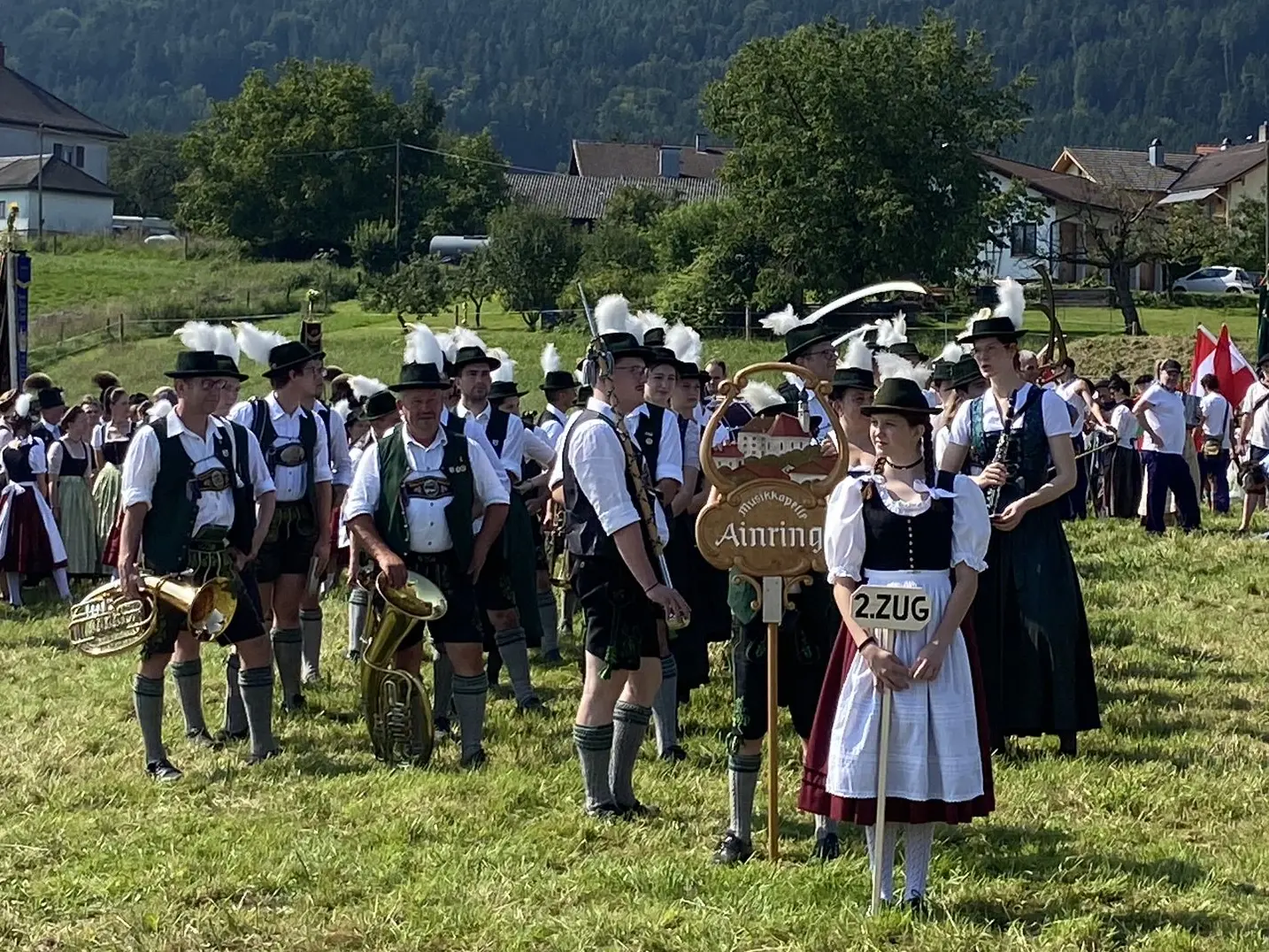
An impressive procession followed from the village up to the hills where the plots, previously marked out for the championship, were all ready. Each region or country left one after the other, often with many in traditional clothing, with musicians, their flags, and, of course, the mowers, with their competition scythes on their shoulders, with beautiful blades generally measuring between 110 and 130 cm long. Before starting, the championship was blessed.
The procession to the mowing fields
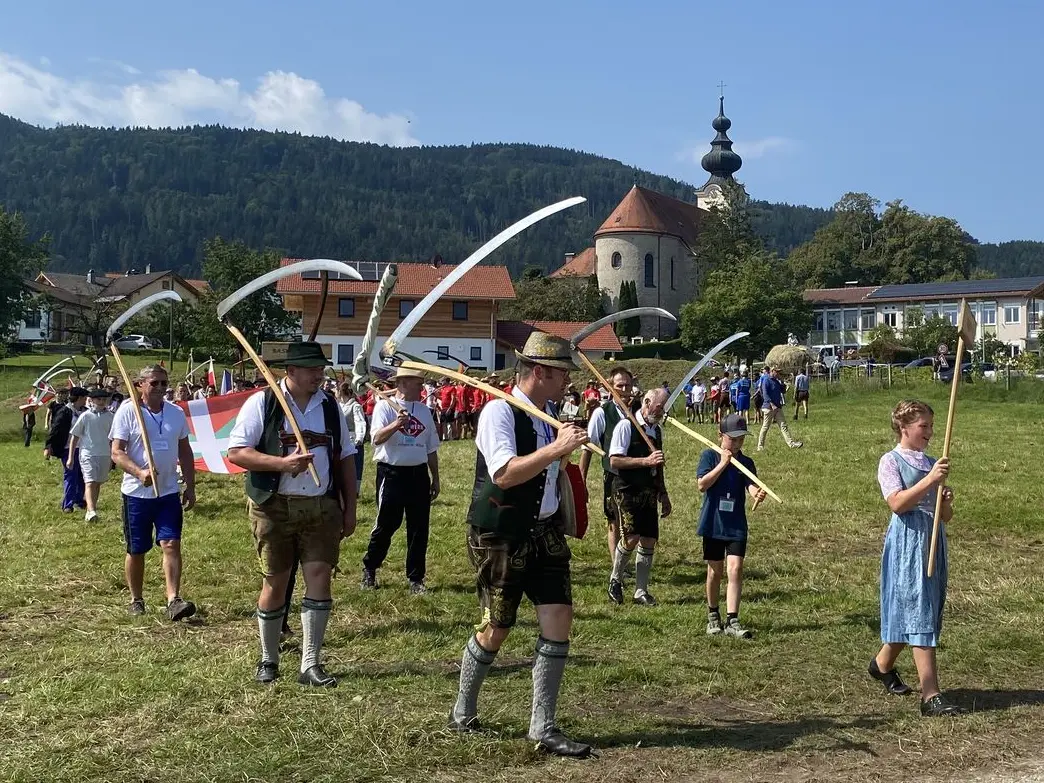
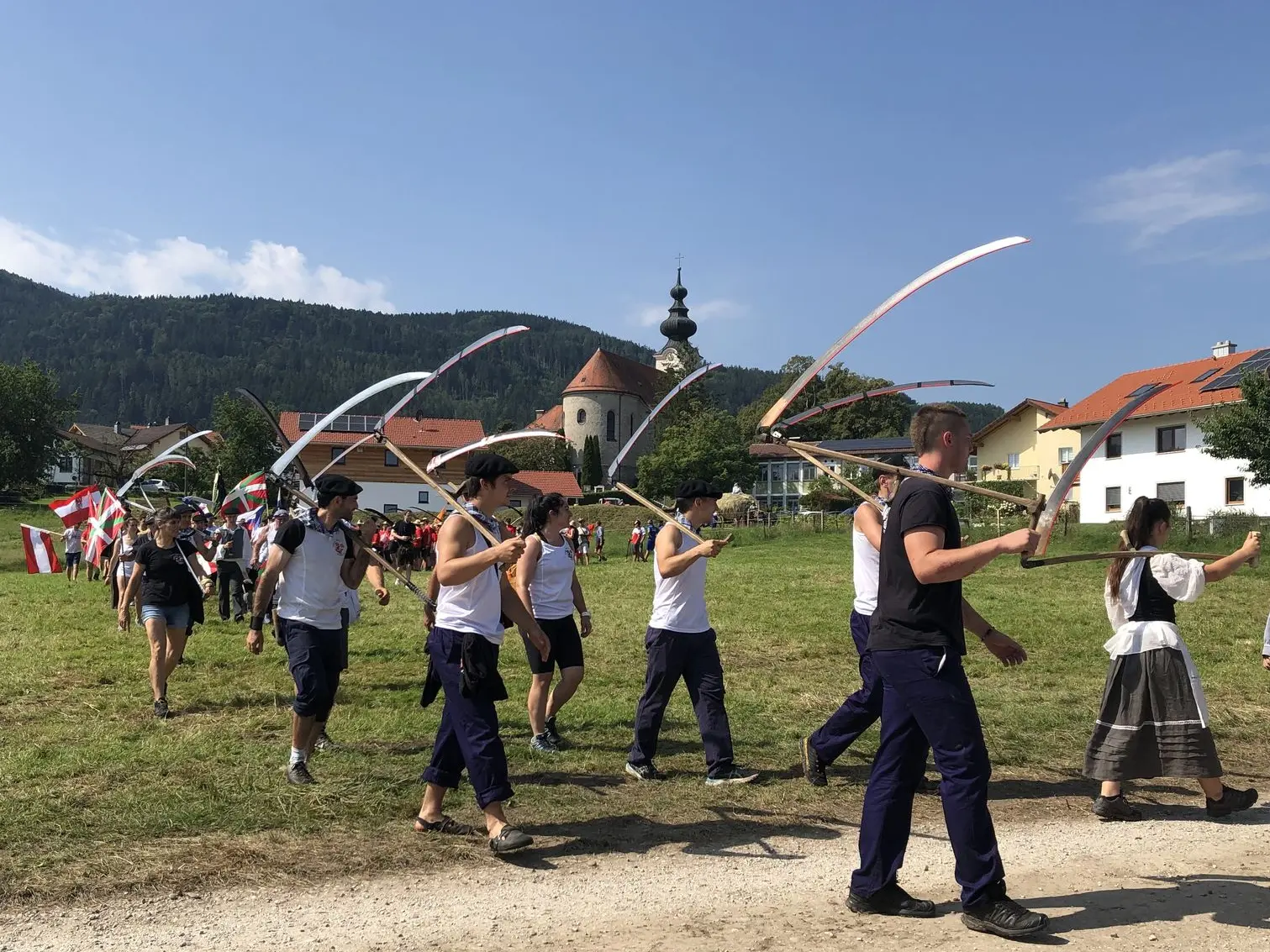
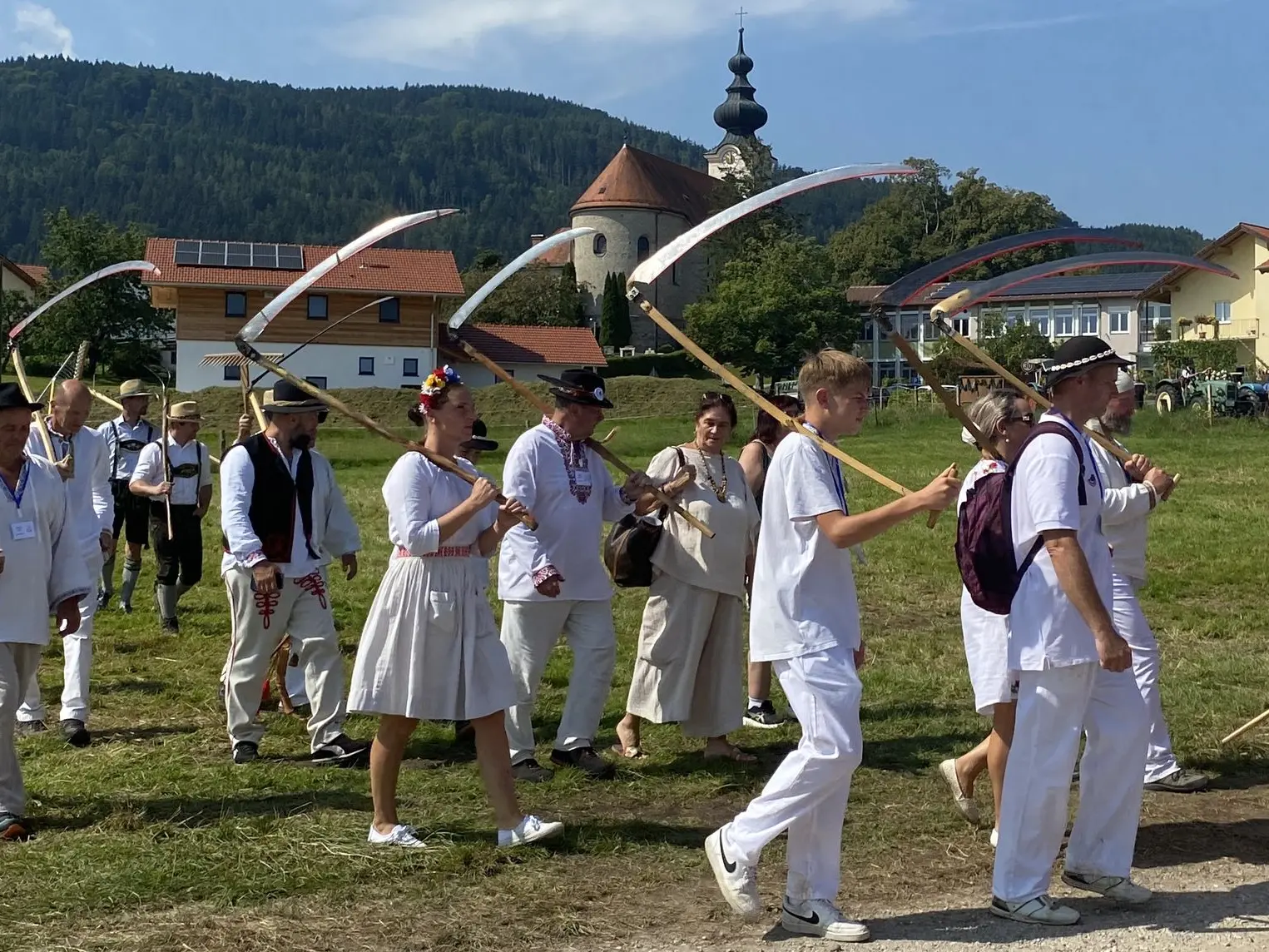
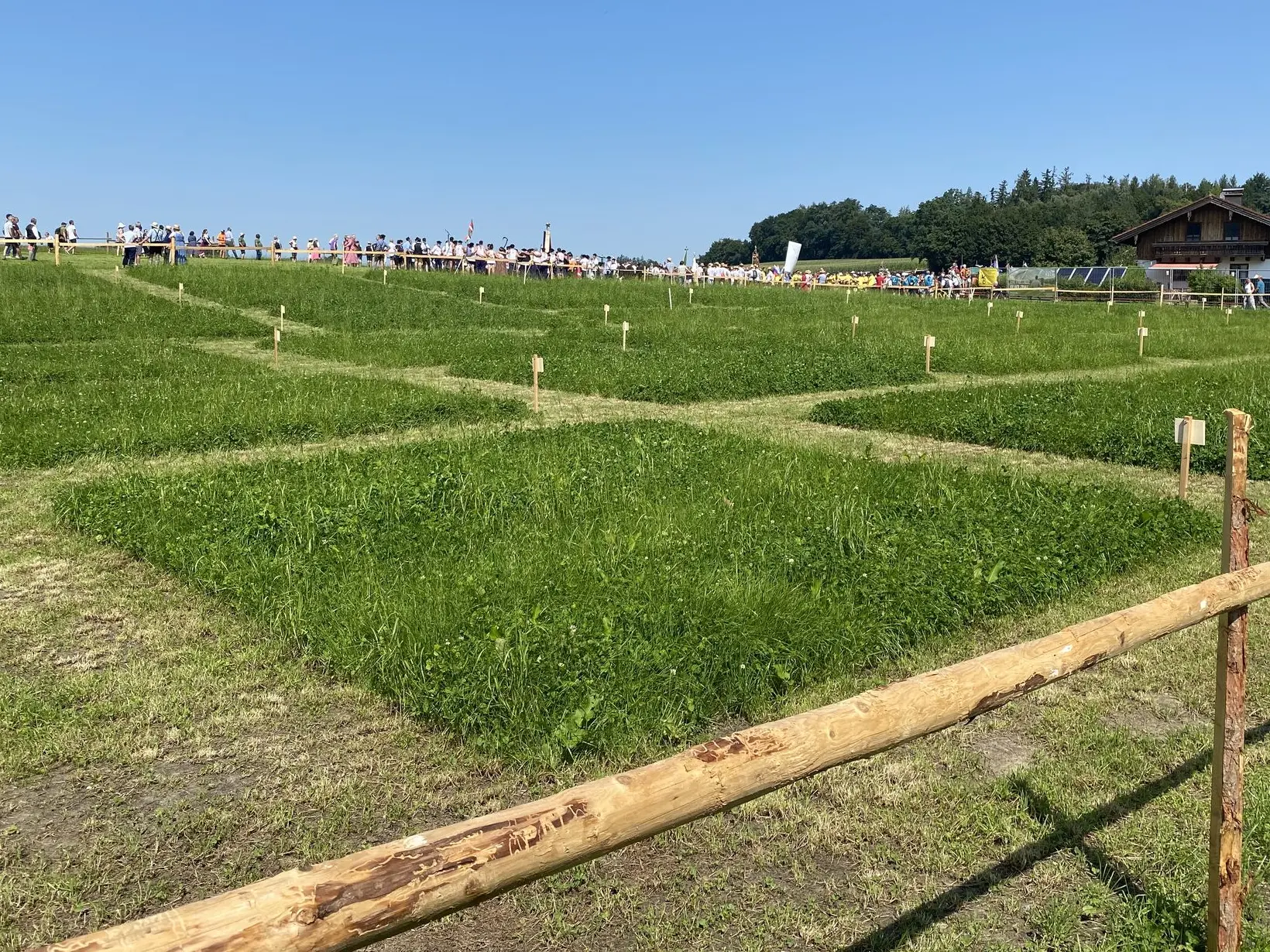
The competitions began around noon with the children, and ended a little after 4 p.m. with the legends (60+). There were several categories, with plots of varying sizes depending on the group. Among the legends, there was even an 80-year-old competitor!
Category | Surface area per competitor | Number of competitors for the category | Fastest mower, in minutes | Country/region of the fastest mower in the category |
Children -14 | 5 x 5m (25m2) | 15 | 0:58,61 | Switzerland |
Girls 14-18 | 7 x 5m (35m2) | 5 | 1:27,05 | Basque Country |
Boys 14-18 | 7 x 5m (35m2) | 12 | 1:07,01 | Switzerland |
Women | 7 x 5m (35m2) | 27 | 1:08,48 | Austria |
Men | 10 x 10m (100m2) | 66 | 2:32,06 | Switzerland |
Legends 60+ | 5 x 5m (25m2) | 18 | 0:35,74 | Switzerland |
The jury then adds an additional penalty time to the actual mowing time, based on the quality of the cut (uniformity and neatness).
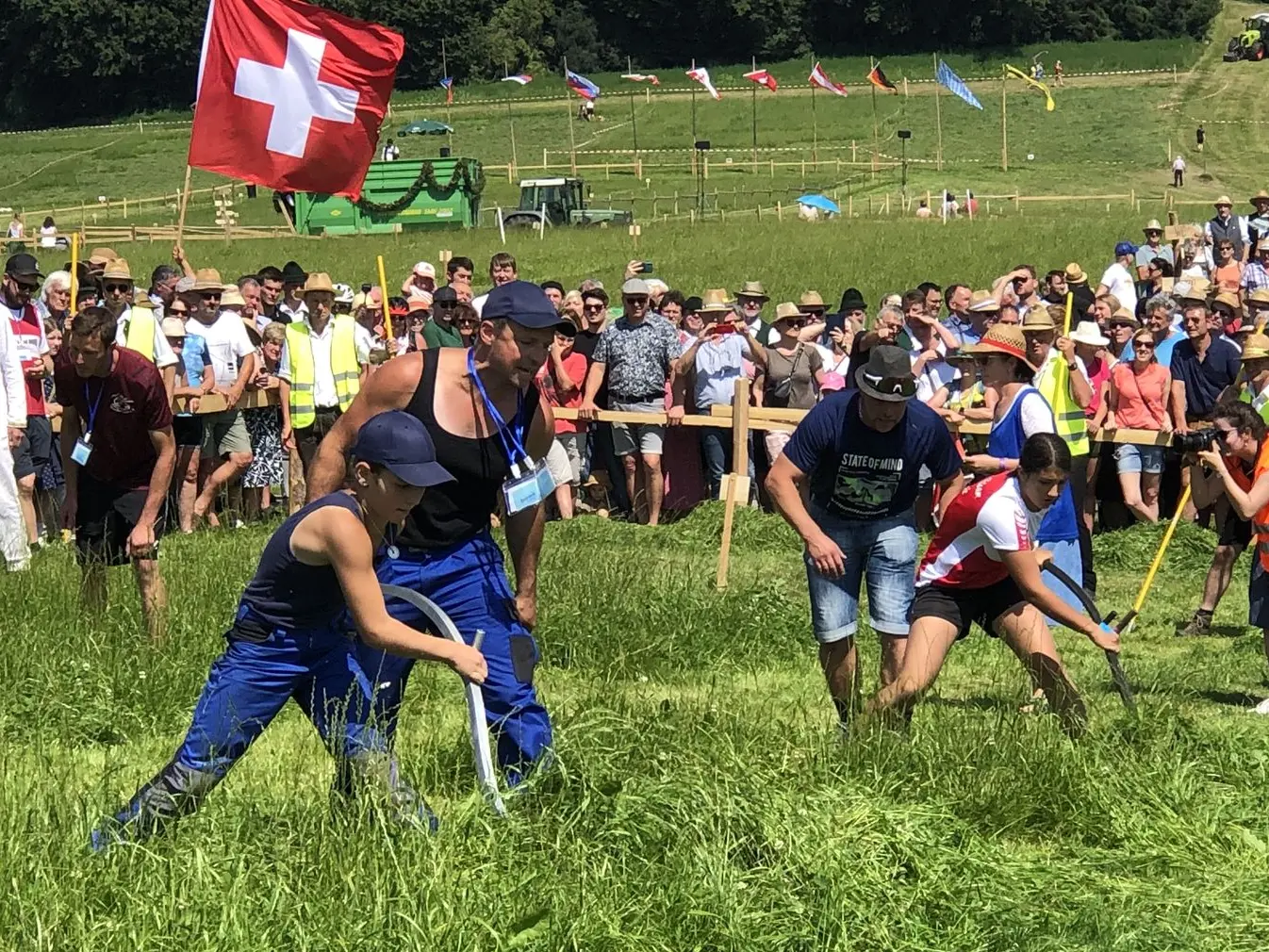
The skill of the mowers, even the youngest, was impressive!
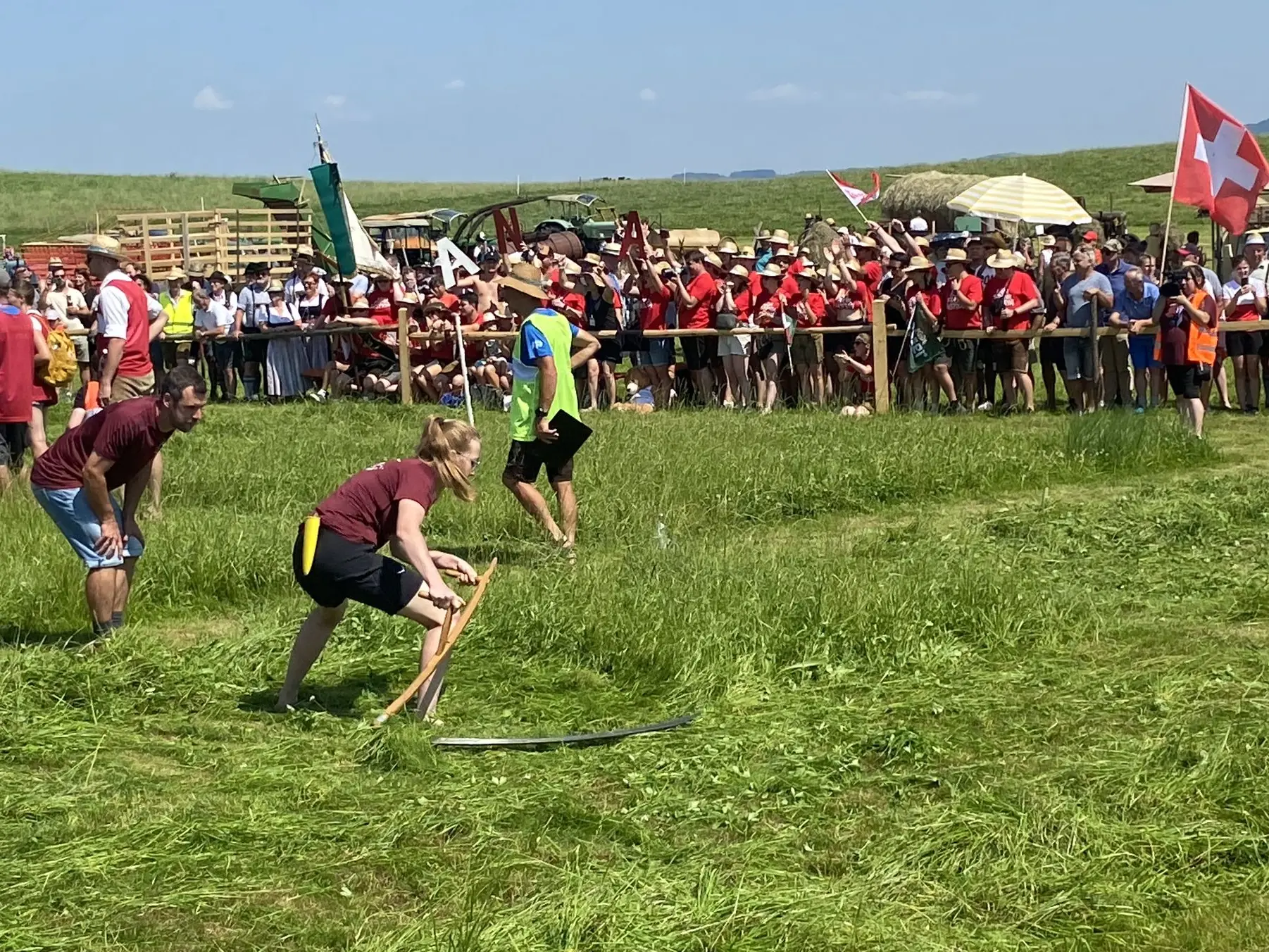
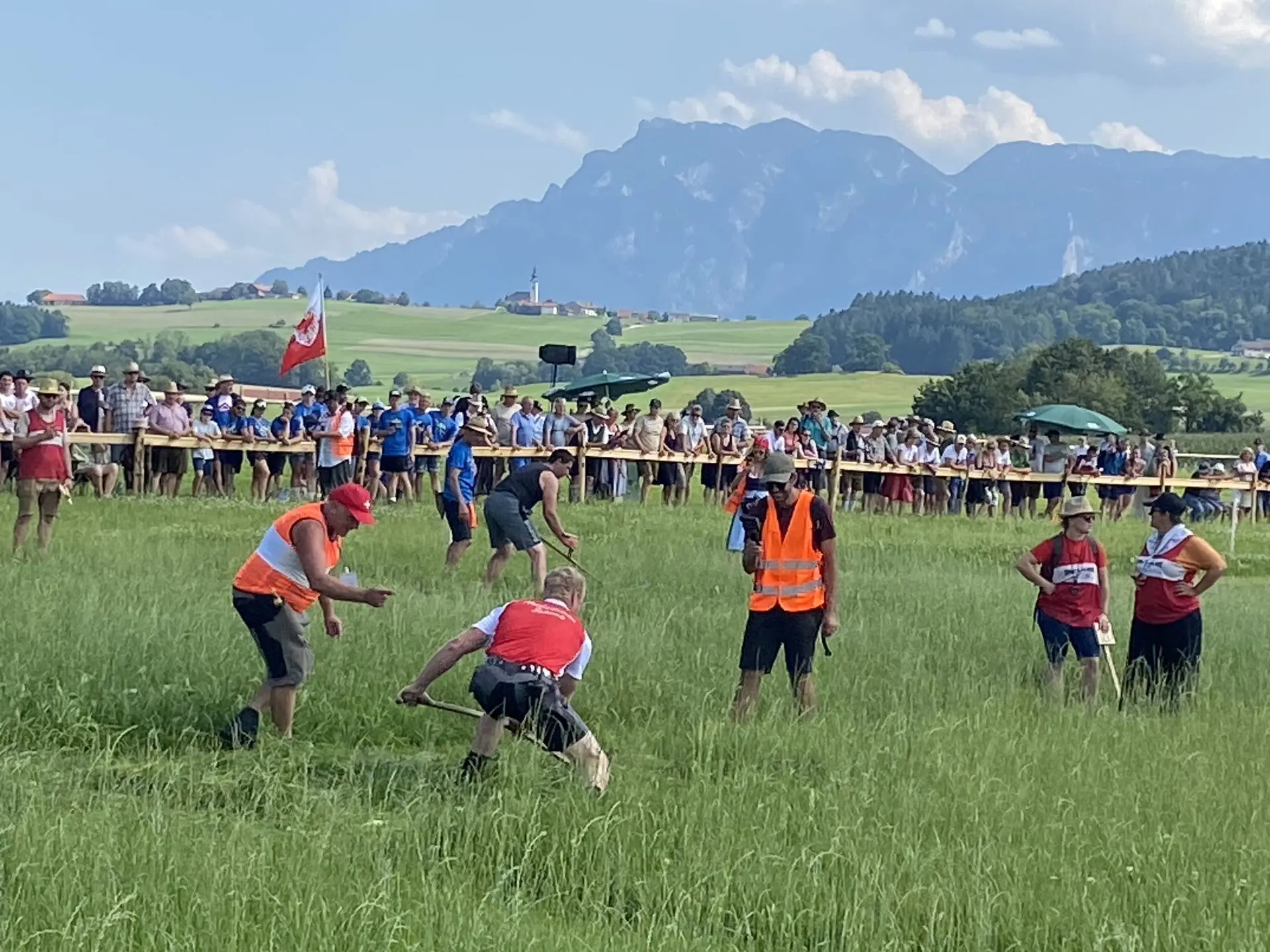
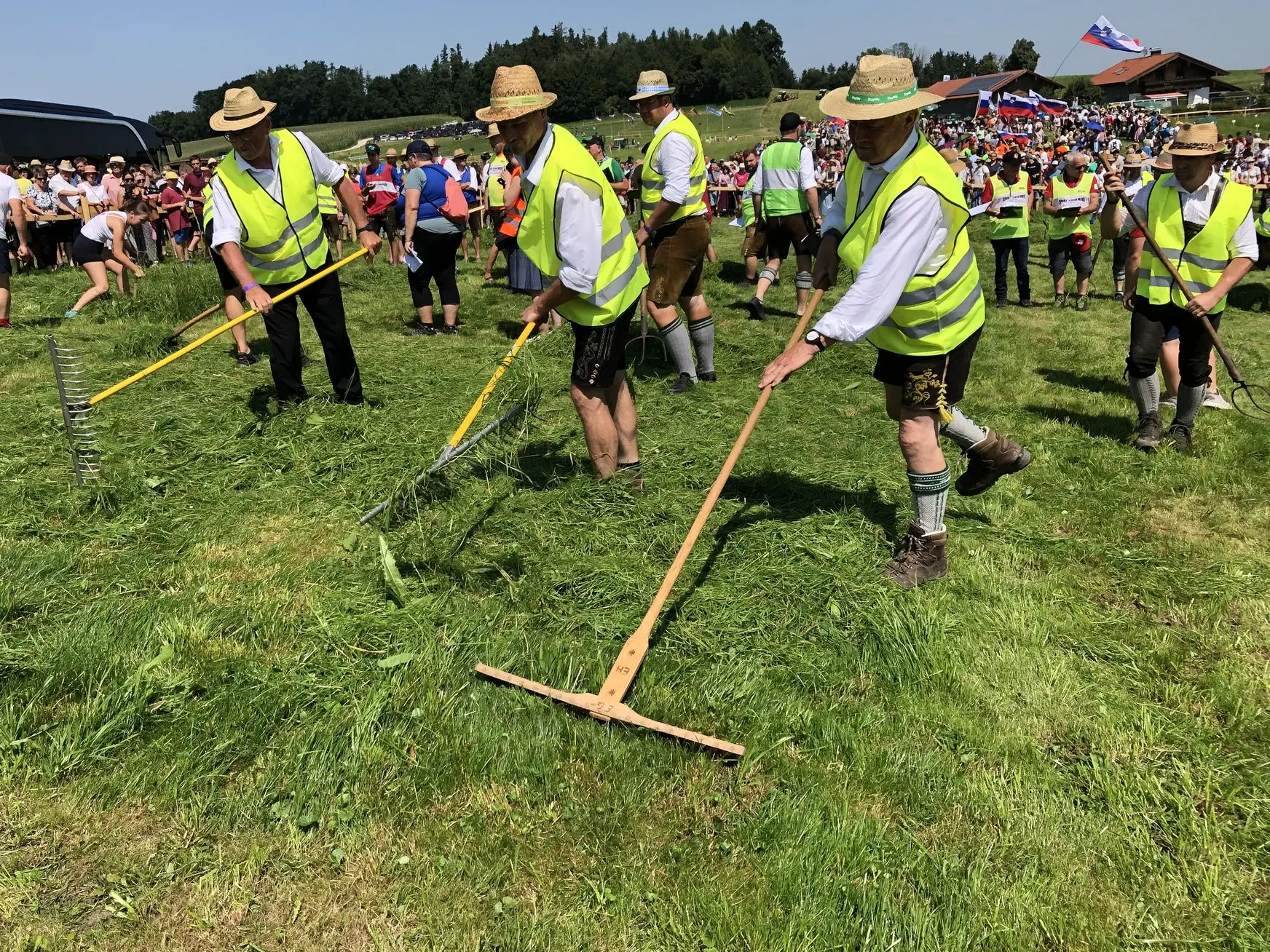
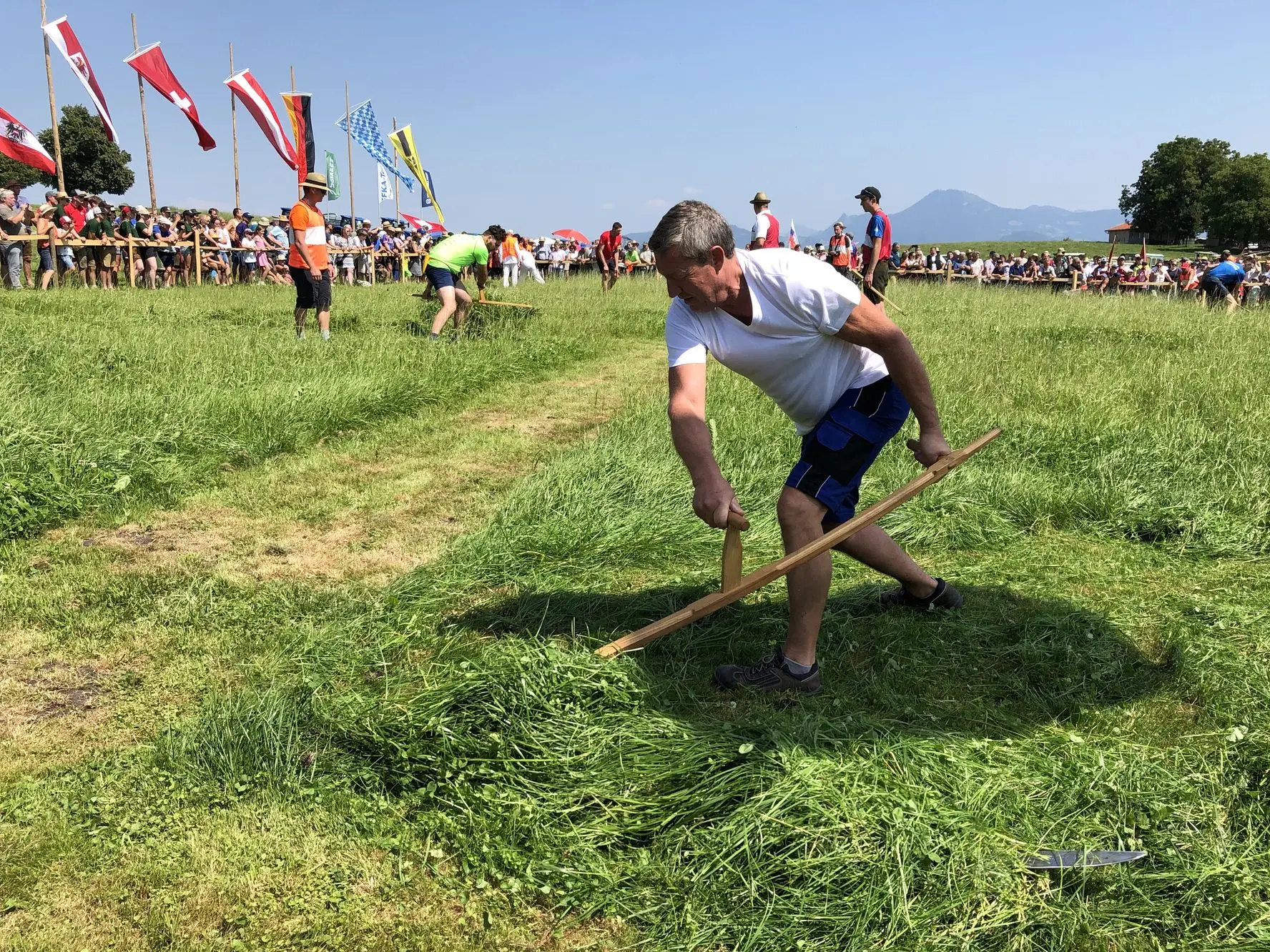
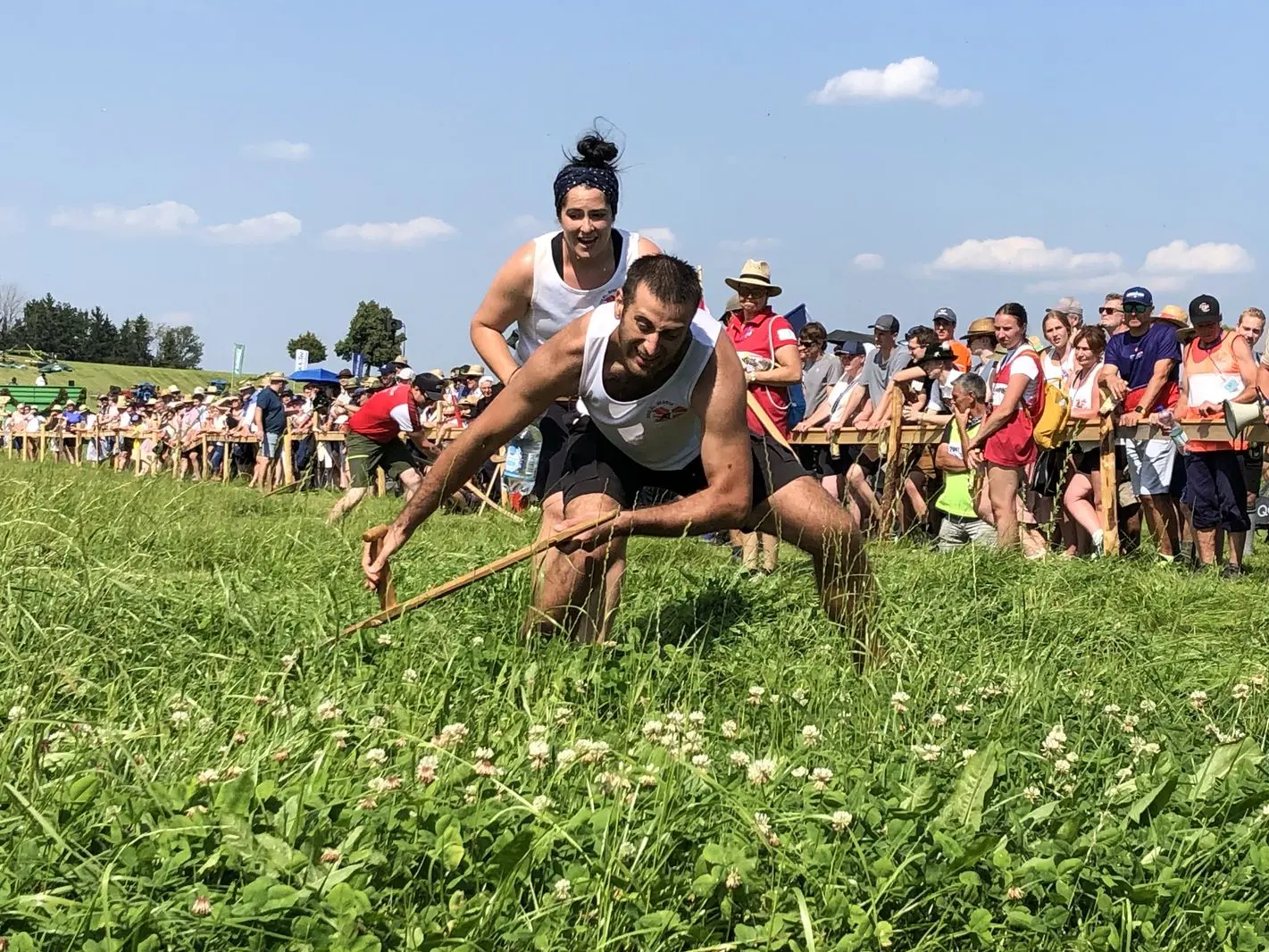
Obviously, the effort required during a competition is nothing like normal everyday scything, the goal being to strive for record speed!
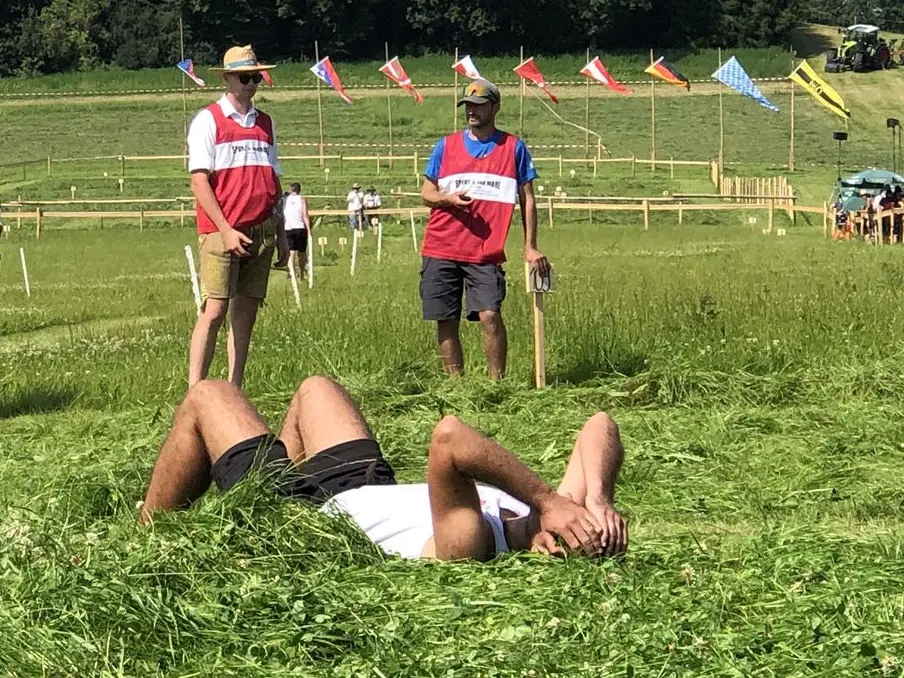
The collapse after the intense effort!
"An die sense!
Fertig? Los!" ("At your scythes! Ready? Go!")
After the competitions and while waiting for the juries to deliberate, we could cool off in the marquee after several hours in the sun (it was hot, even for the spectators, so just imagine for the competitors!), with the pleasant entertainment of the orchestra. The awards ceremony, again with music, took place in a friendly, encouraging, and lively atmosphere, with hundreds of people present to celebrate together. The positioning of each competitor was announced, from slowest to fastest after correction for penalties. The top three in each category came to the front of the stage to receive their glass trophy. The champions of the adult categories also received a magnificent wooden plaque with a painted scything scene.
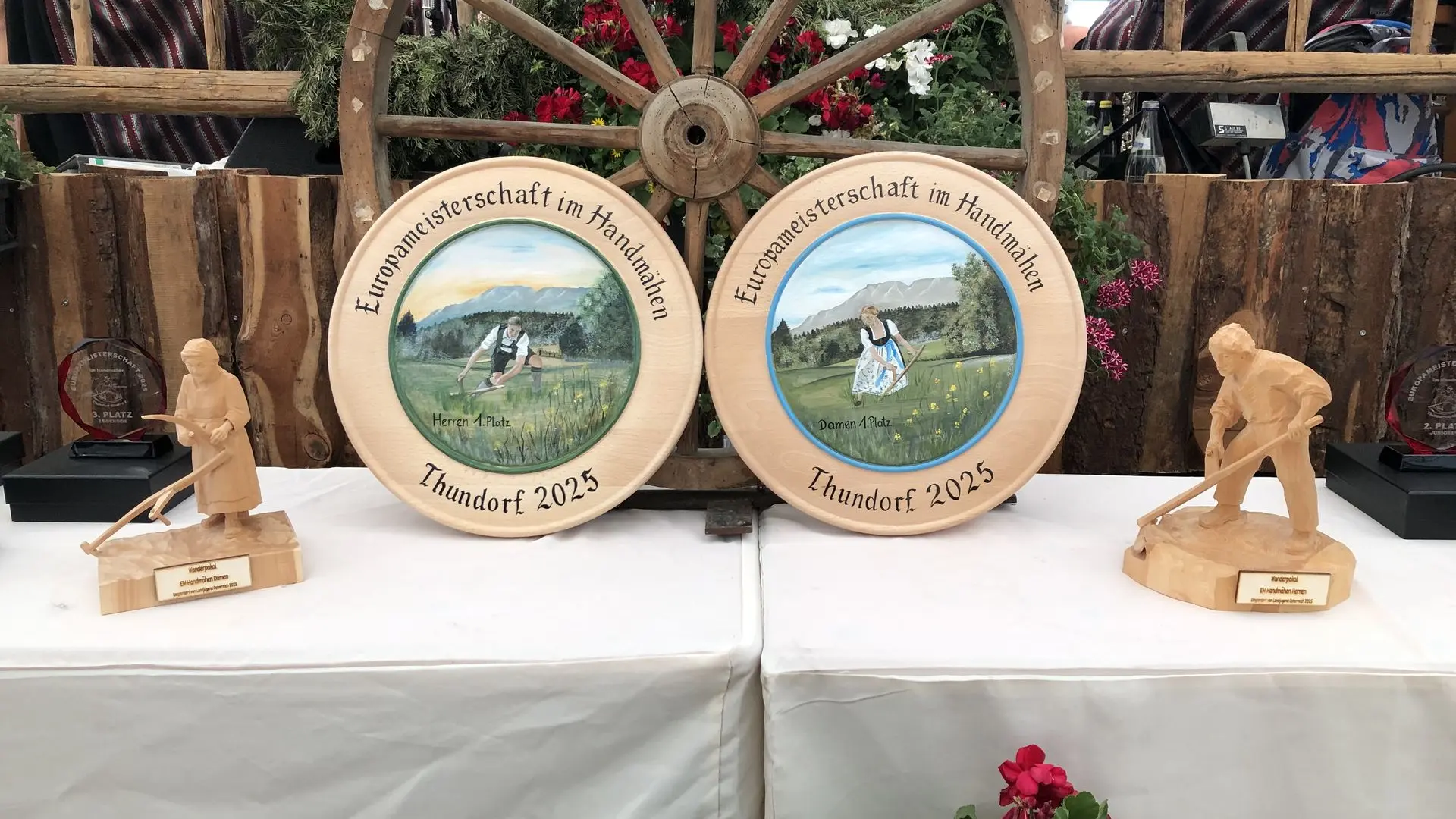
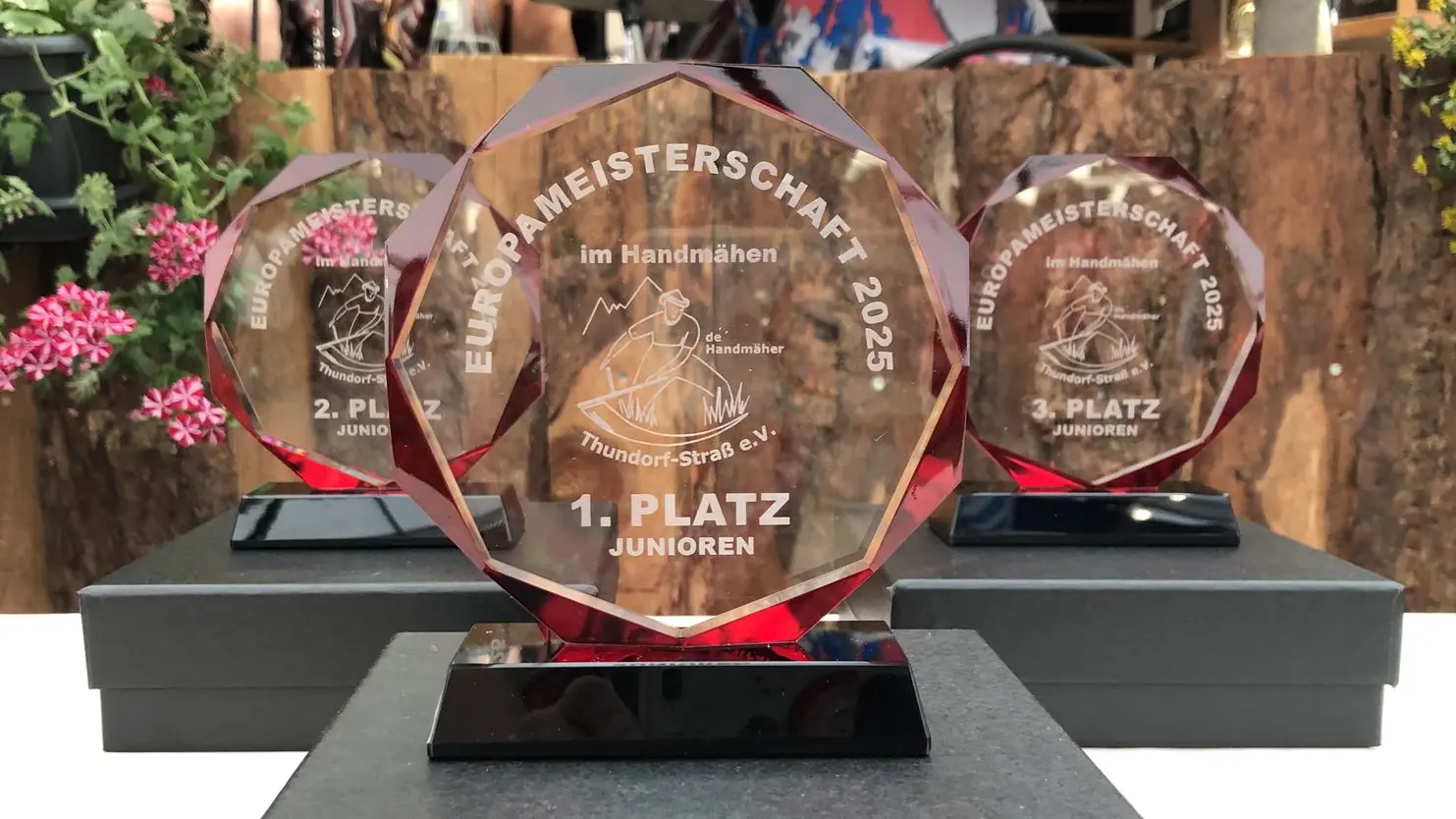
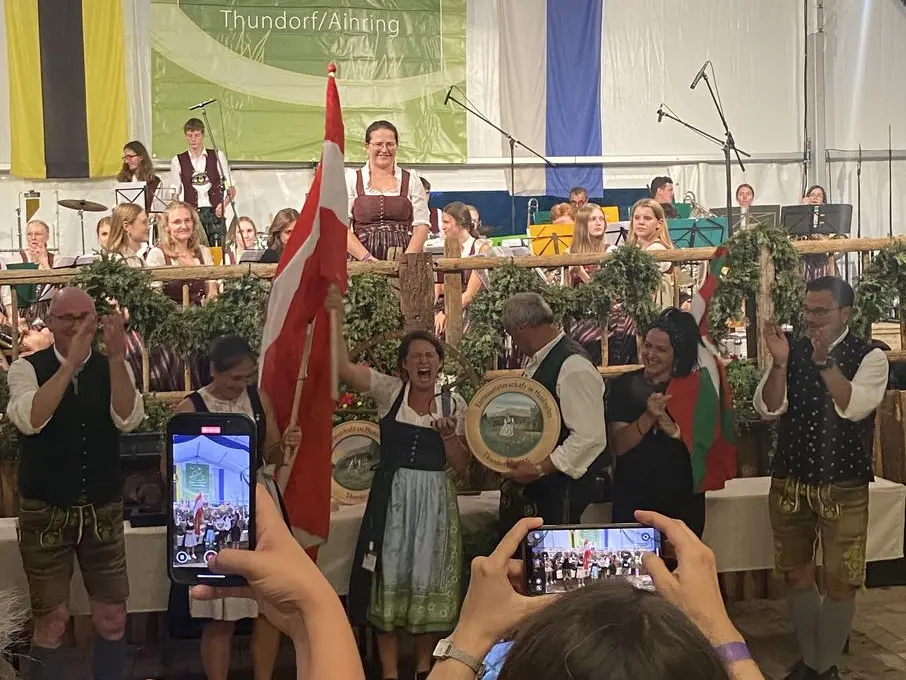
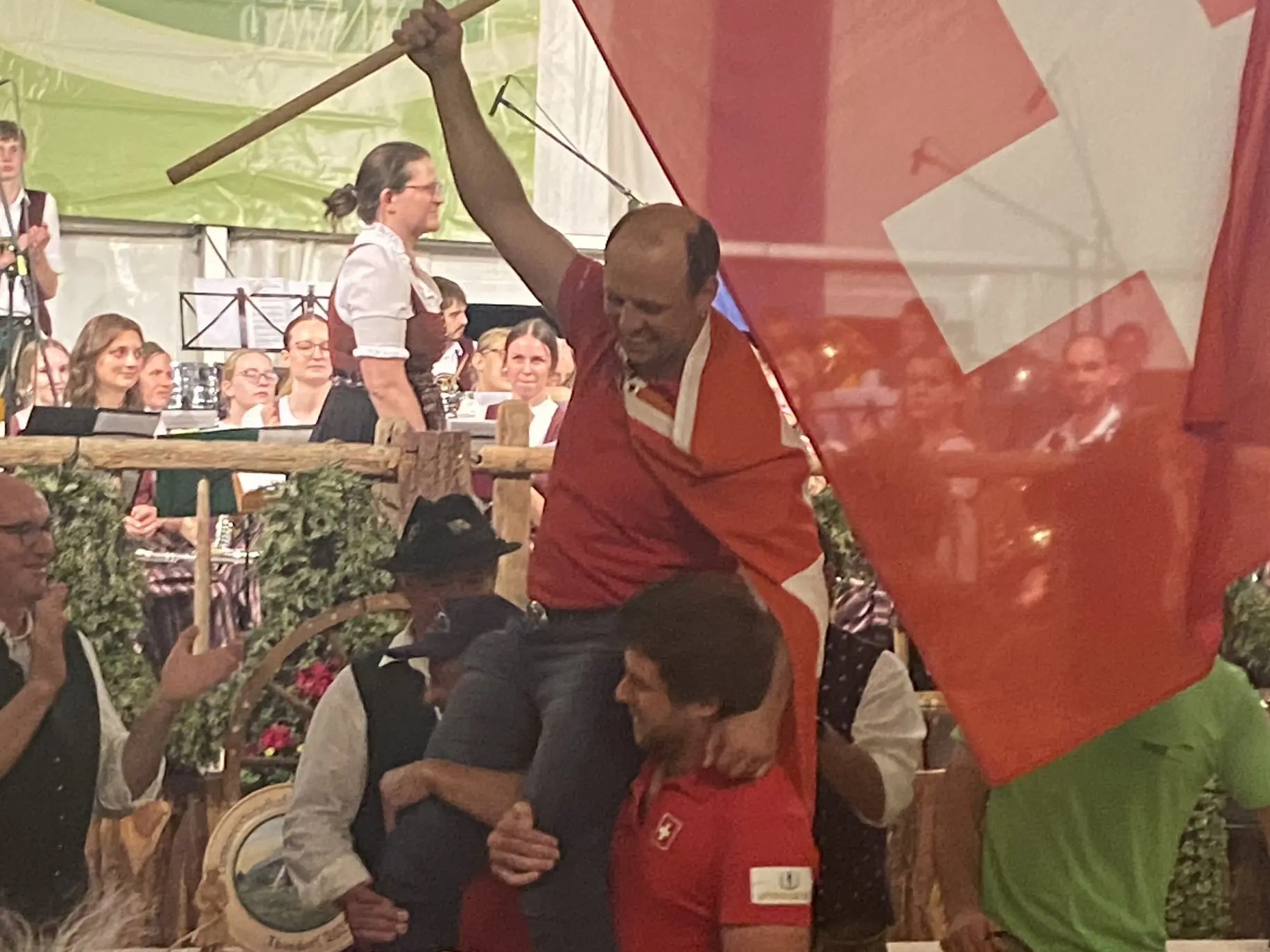
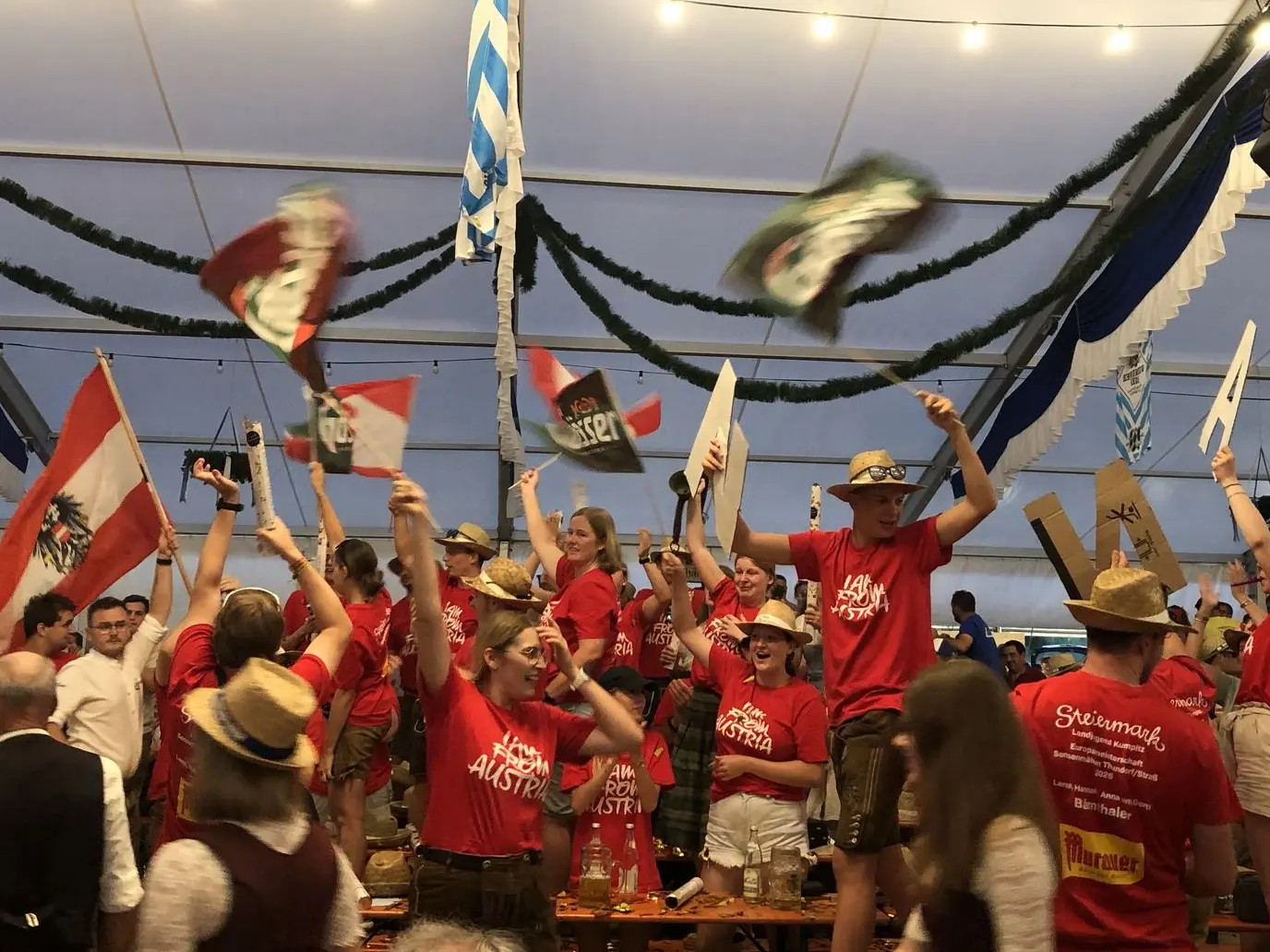
Congratulations to all the competitors for such an outstanding display of skill!
We are delighted to have made the trip; this joyful and colorful event entertained and inspired us! We'll keep great memories of it.
We look forward to the next edition in two years in South Tyrol, with our scythes this time (and perhaps a small delegation? ) !
Note: If any enthusiasts are interested in competition blades, we can supply them to order in lengths up to 130cm. Waiting time will depend on our other inventory needs.