Skip to Content
Le Pic Vert
  • 0
  • 0
  • Sign in
  • NL EN FR
  • Home
  • The scythe
    • The scythe, an efficient tool
    • Quality scythes
    • Our scything guidelines
    • Scything workshops
    • Videos
    • Links
  • Wood
    • My story
    • My hand-tool wood workshop
    • From tree to chair
    • Links
  • Shop
  • Calendar
  • Blog
  • About us/contact
Le Pic Vert
  • 0
  • 0
    • Home
    • The scythe
      • The scythe, an efficient tool
      • Quality scythes
      • Our scything guidelines
      • Scything workshops
      • Videos
      • Links
    • Wood
      • My story
      • My hand-tool wood workshop
      • From tree to chair
      • Links
    • Shop
    • Calendar
    • Blog
    • About us/contact
  • NL EN FR
  • Sign in

The scythe, an efficient tool

The scythe, a sustainable and resistant tool, allows you to work efficiently, comfortably, and in peace and quiet, with the sweet smell of freshly cut grass, while respecting nature and with your food as your only fuel.


​What a wonderful way to combine work and pleasure!

Whenever I see anyone cutting his grass with his scythe, I know that he is practicing awareness.

​- Thich Nhat Hanh in his book "Peace Is Every Step"

The cut, much cleaner than that of a machine, seems to favour the regeneration of vegetation and would therefore be more respectful of biodiversity, provided of course that the other key factors are taken into account. Amphibians, reptiles and other small animals are not often victims of the passage of the scythe.

Tall grass, brambles, thistles... all can be cut with a scythe.

It can even be used to maintain lawns. The vast lawns of castles were once maintained with scythes!

Mowing with a scythe does not require protective equipment/clothing aside from maybe a cut-resistant glove for sharpening the blade, and the maintenance of the scythe is done by the mower himself. Its use is most often less tiring and generally as fast, if not faster, than the brush cutter. See for yourself!
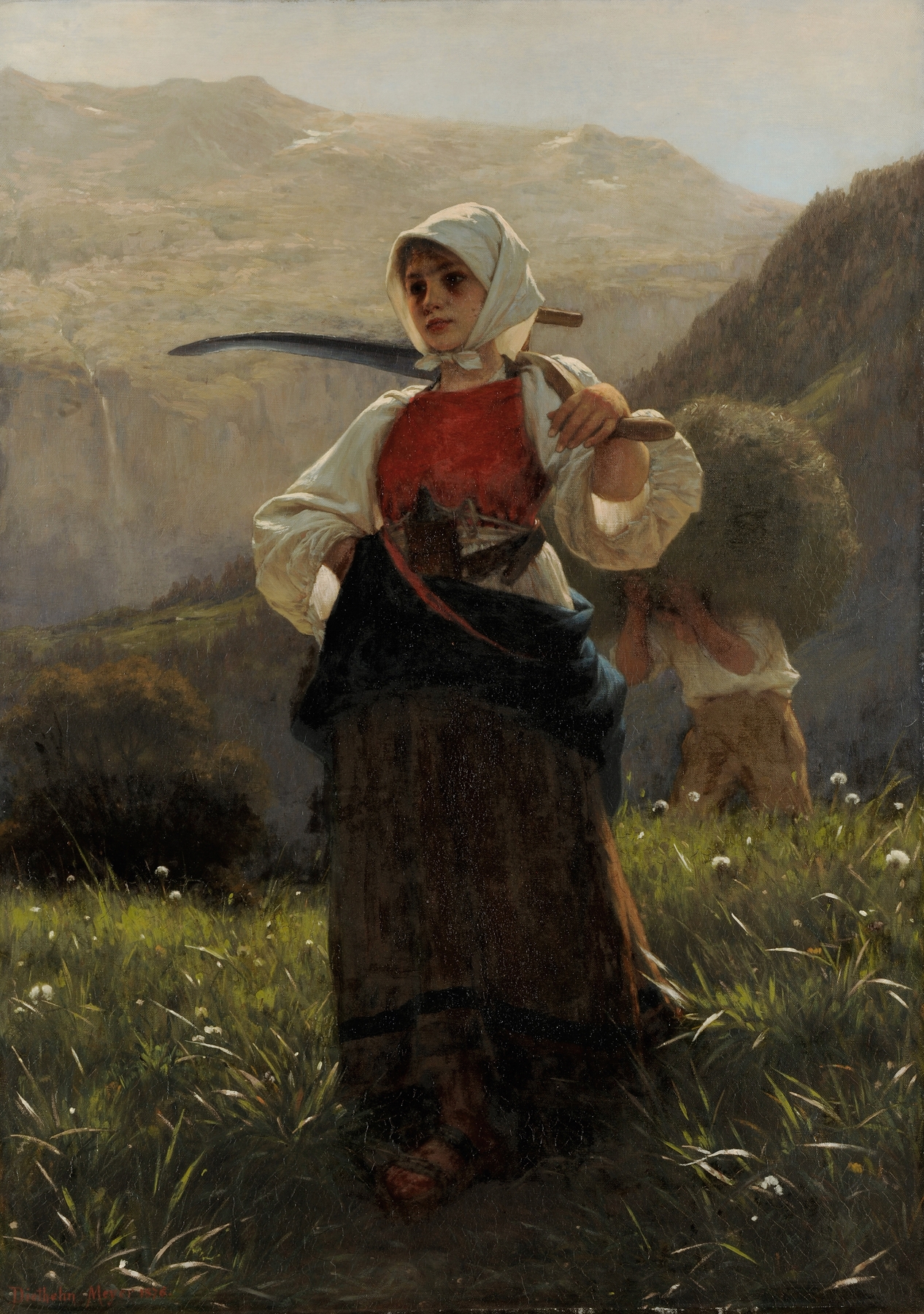
woman with a scythe
​Woman of the Haslital, Returning from the Hay Harvest, Carl Diethelm Meyer, 1876

×


For various internal reasons at Falci, the quality of their blades has recently declined significantly, to the point that in 2024 we had to return several models of blades we had ordered, which is why we no longer offer certain models (or certain lengths of certain models) in our shop.

There has been a deterioration in several blade characteristics, which has a negative impact on their ease of use and their effectiveness.

We hope that Falci will once again be able to produce blades of the excellent quality we have known. We're keeping in touch with them regarding this issue and are closely monitoring the situation.

In the meantime, rest assured, we continue to sell only Falci blades of good, very good, or excellent quality, from previous production runs.

​

×

Mowing grasses and other soft vegetation requires proper maintenance of the blade, which includes peening the edge with an appropriate hammer and peening anvil, and whetting it with a natural whetstone. The whetstone is carried in a whetstone holder on the belt, immersed in water with a bit of vinegar. Adding a small drizzle of vinegar increases the stone's bite and helps keep it clean and functional.


Peening draws out the steel to ensure the correct thinness and geometry of the edge. This operation is done on average after every four hours of mowing, but this time span varies depending on the vegetation, the conditions, the whetstone used, and the mower's technique.


Then, in the meadow, the edge is honed with a whetstone every few minutes, as soon as a little more resistance is felt and/or if the scythe cuts the grass less well.


Frequent peening and honing are essential for proper blade performance!

​

×

Subscribe to the Pic Vert newsletter.

Receive updates about our blog articles, workshop dates, and other events, etc.

​ Merci pour votre inscription !

Subscribe

​

​

        Follow us

Réseaux sociaux

​​

     Share this page

Partager

Subscribe to our newsletter

Contact


© Peter De Schepper     Unless otherwise noted, all photos on this website are our own.

Terms and Conditions    ​Legal notices     Privacy policy     Cookie policy

This website uses cookies to provide a better user experience. Cookies policy

Accept only essential cookies Accept all